Bilge water
treatment
From ship to port: the REC-OIL plant treats bilge water and oily residues on site, recovers the oil as fuel and reduces the volumes to dispose of
What is bilge water
Bilge water is the mixture of water, oils and solids that collects in the bilge, the lowest part of the hull, below the engine room
Degreasers and detergents bind the oil to the water in stable emulsions: this is why letting it settle is not enough to separate it. Together with oily residues it is the slop oil of ships
- Composition
- Fresh water and seawater, heavy fuel oil, lubricating and hydraulic oils, grease, detergents and solids
Where it comes from,
MARPOL Annex I rules
From the ships that call at the port. In the engine room, leaks, condensate and wash water end up in the bilge; alongside it are the oily residues, the sludge left over from the purification of fuel and lubricating oils
The MARPOL convention, Annex I, allows discharge into the sea only with the ship en route, after passing through oil filtering equipment and with no more than 15 ppm of oil. Everything else must be delivered ashore, to port reception facilities
- Regulations
- MARPOL Annex I, Directive (EU) 2019/883, Italian Legislative Decree 197/2021
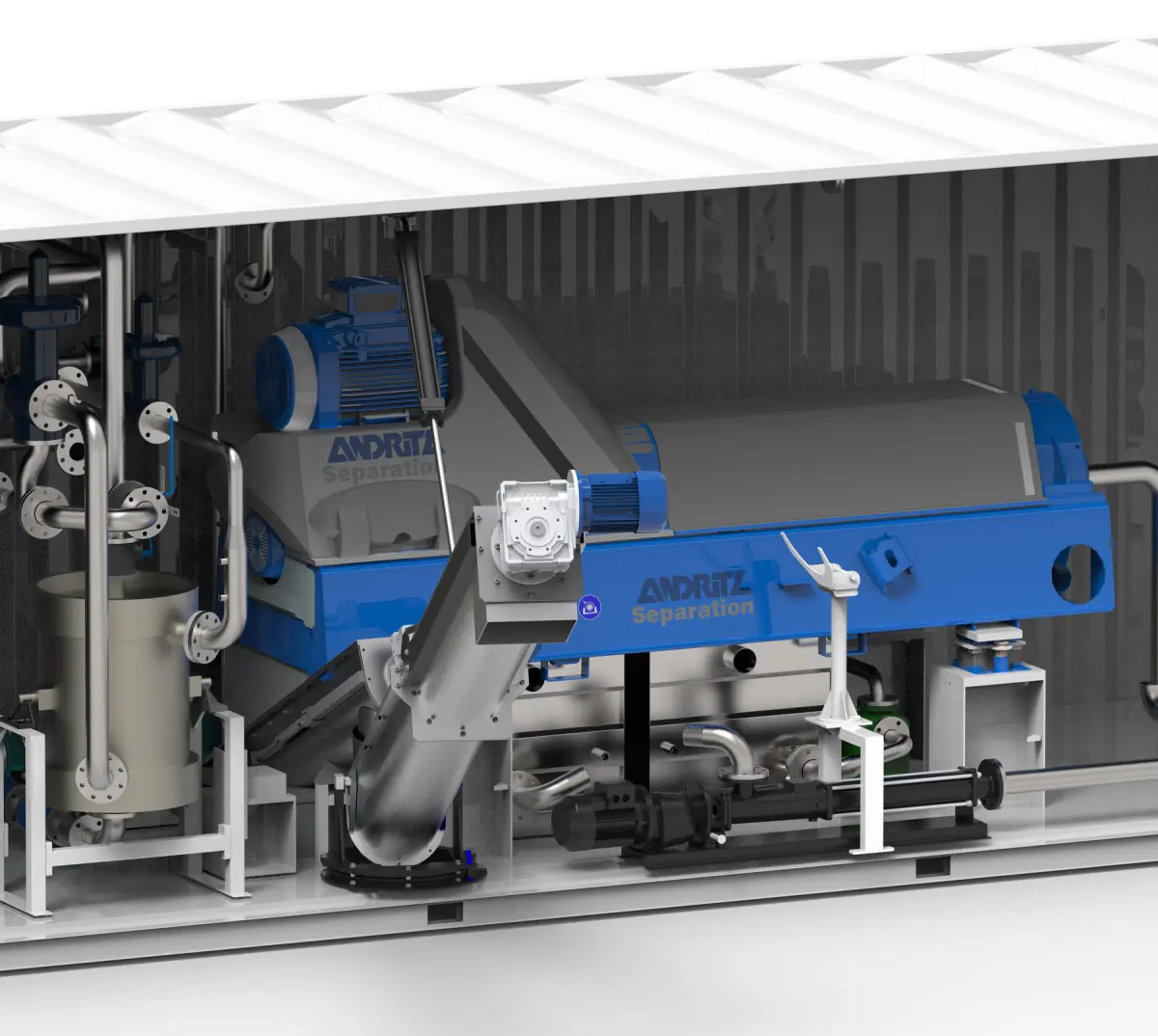
How oily bilge water treatment works
REC-OIL is a containerised plant, mobile or fixed: it arrives at the port, connects to the storage tank and continuously separates oil, water and solids
- Collection
- From the ship, via barge or terminal, to the storage tank
- Preparation
- Heating and mixing in the reactive tank, dosing of demulsifier and polyelectrolyte to break the emulsions
- Separation
- The Andritz three-phase ATEX decanter separates oil, water and solids; the pipette adjusts the levels while the machine is running
- Polishing
- A high-speed separator removes the remaining water and solids from the oil
- Indicative flow rate
- about 14-40 m3/h
- System
- REC-OIL with high-speed separator
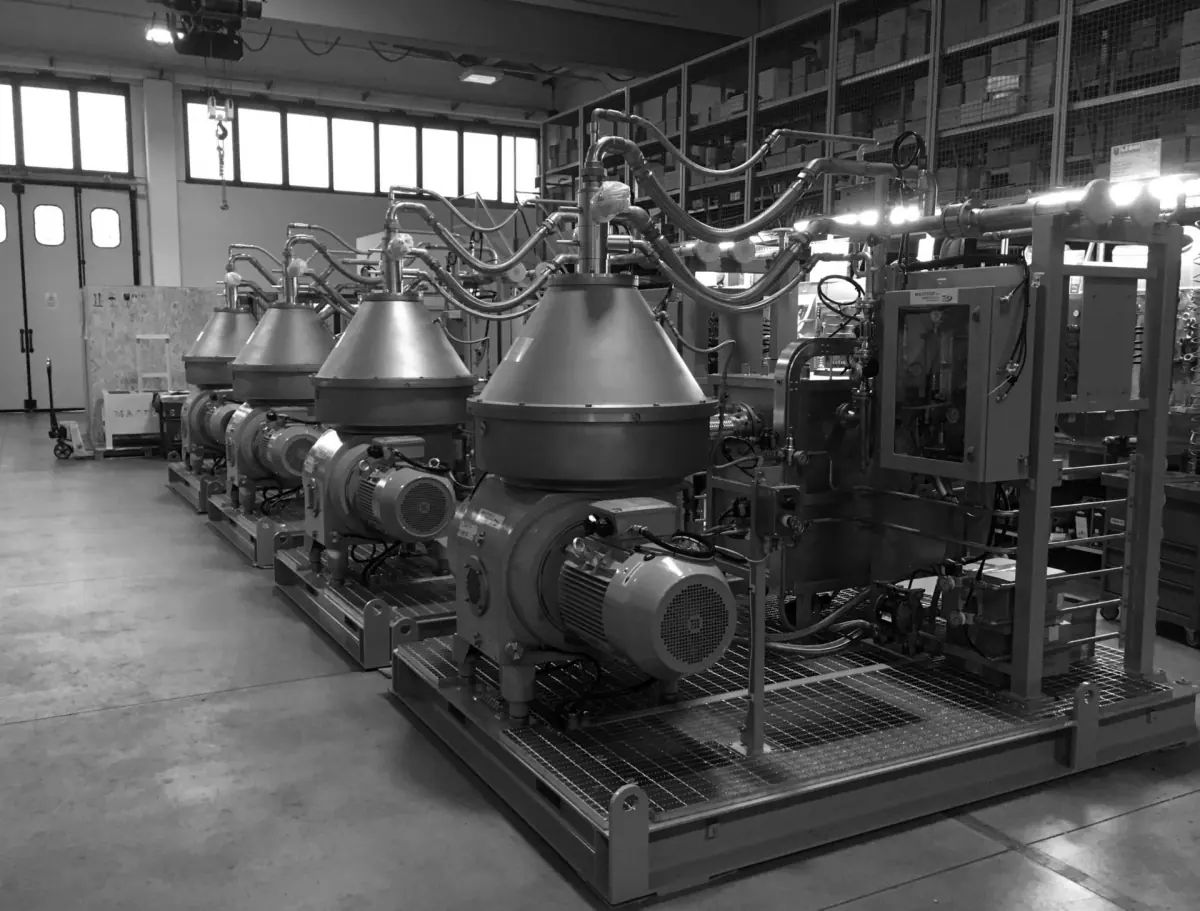
What comes out
Three separate outputs: the oil becomes a fuel again, the solids come out spadeable and much less material is left to haul away
Indicative flow rates and yields: actual results depend on the product and the plant
Common questions
about bilge water
What is the difference between bilge water and oily residues (sludge) from ships?
Bilge water is mostly water, with oil and solids in suspension. Oily residues, or sludge, are the waste from the purification of fuel and lubricating oils: denser and richer in oil. REC-OIL treats both
Can bilge water be discharged at sea under MARPOL Annex I?
Only on three conditions: ship en route, oil filtering equipment in operation and no more than 15 ppm of oil in the discharged water, without dilution. Whatever does not meet them is delivered in port
Isn’t the ship’s oily water separator enough?
The oily water separator for bilge water is what the ship uses to discharge at sea within the 15 ppm limit. The oil, sludge and water that stay on board reach the port: that is where REC-OIL works
What do the regulations say about bilge water?
The MARPOL convention, Annex I, sets the conditions for discharge at sea. Directive (EU) 2019/883, transposed in Italy by Legislative Decree 197 of 2021, lists bilge water among the waste from ships to be delivered in port
What are port reception facilities?
The port’s facilities, fixed, floating or mobile, that receive waste from ships: this is how Italian Legislative Decree 197 of 2021 defines them. Bilge water and oily residues are delivered there, and can be treated there
What is the EWC code for bilge water, and is it hazardous waste?
In the European List of Waste (EWC or LoW codes) bilge oils have a heading of their own, 13 04, and are classified as hazardous. Classifying each individual waste is the responsibility of whoever produces it
What are bilge water and oily residues called in ship documents?
Bilge water, or oily bilge water. Oily residues are oil residues, or sludge, and the separator for oily water is the oily water separator
How does bilge water disposal work?
First it is treated, then only what is left is disposed of. REC-OIL is containerised and works next to the port’s tank: separation takes place on site and only the solids are hauled away
How much bilge water can the plant treat?
As a guide, from 14 to 40 m3/h, depending on the model and the composition of the product
What does the oil recovered from bilge water become?
A fuel oil with 0.1-1% water and 0.1-0.5% solids, after polishing in the high-speed separator. These are indicative yields
Do you have bilge water to treat?
Let’s talk
We start from your waste: composition, volumes and site
Contact us