Oily sludge
treatment
Refinery sludge, API and DAF sludge and tank bottoms: the three-phase decanter splits them into oil, water and solids right on site and reduces the volumes to dispose of
What is oily sludge
Oily sludge is sludge that contains hydrocarbons: a dense mixture of oil, water and fine solids that forms wherever oil meets water and sediments
It is the densest part of slop oil: stable emulsions that simple settling cannot separate. It holds oil worth recovering and water that swells its volume
- Feed
- As a guide, up to 35% solids, 10 to 75% oil, 10 to 80% water
- Also called
- Oil sludge, petroleum sludge
Where does refinery
oily sludge come from
In refineries and depots: API separator sediments, DAF sludge, desalter and settling residues, tank bottom sludge
Outside the refinery: oil lagoons and sludge pits used for storage, oily residues from ships, drilling mud
- Waste
- Oily sludges from maintenance operations of the plant or equipment, code 05 01 06* in the European List of Waste: hazardous
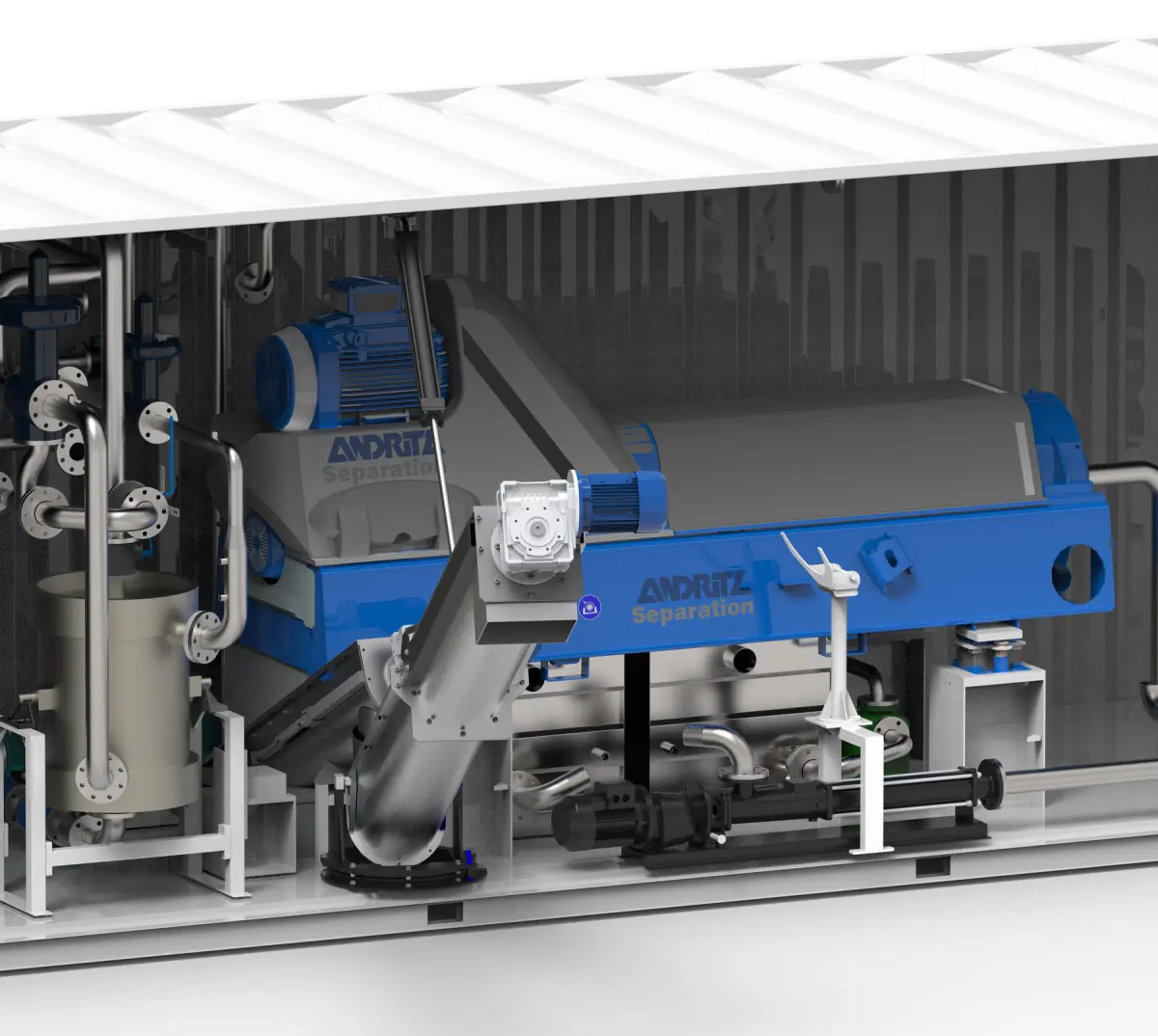
How oily sludge treatment works
With a centrifuge: the three-phase decanter continuously separates oil, water and solids. REC-OIL brings it on site, in a container, with everything needed before and after it
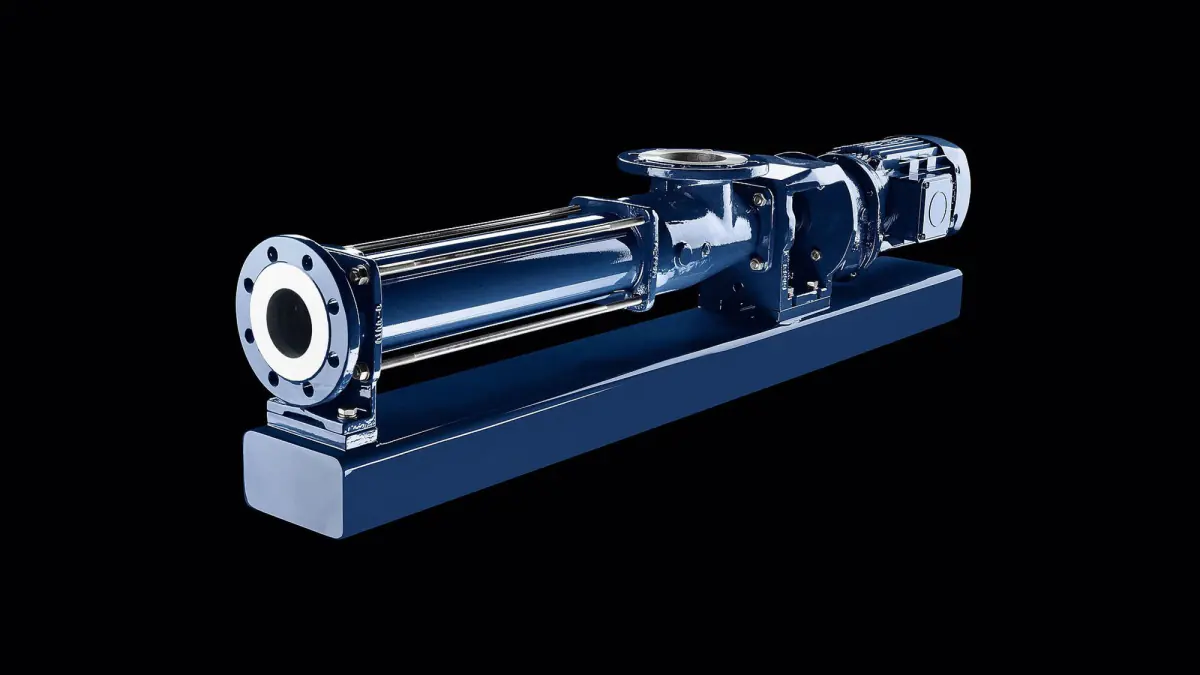
- Pumping
- Progressive cavity pumps move the thick sludge from the tank to the decanter
- Heating
- The spiral heat exchanger brings the mixture to 85-95 °C
- Conditioning
- Polyelectrolyte and demulsifier, dosed in line, prepare the mixture for separation
- Separation
- The Andritz three-phase ATEX decanter separates the three phases; the pipette adjusts the levels while the machine is running
- Flow rate
- up to 40 m3/h, depending on model and application
- System
- REC-OIL, mobile or fixed
What comes out of treatment
This is not just sludge dewatering: the sludge is split into its three parts. Oil to recover, separated water, spadeable solids: only the solids go to disposal
Indicative flow rates and yields: actual results depend on the product and the plant
Common questions
about oily sludge
Can oil be recovered from oily sludge?
Yes: that is the purpose of the treatment. The pipette decanter recovers over 98% of the oil present, with less than 2% water. These are indicative yields
Which centrifuge is needed for oil sludge: a two-phase or a three-phase decanter?
A three-phase decanter centrifuge: a horizontal centrifuge that separates two liquids and one solid at the same time. A two-phase decanter removes the solids but leaves oil and water together
What are API separator sludge and DAF sludge?
The sediments from API separators, which split oil and water in refinery wastewater by gravity, and the sludge from dissolved air flotation (DAF) units, which bring oil and fine solids to the surface
How does oily sludge disposal work?
First it is treated, then only what is left is disposed of. After separation the solids come out spadeable, with over 70% dry solids: less weight, less transport, lower disposal costs
Does oily sludge treatment need a fixed plant or is a mobile plant enough?
A mobile plant is enough. REC-OIL is containerised: it can be a mobile plant, which arrives on site, connects and gets to work, or stay in place as a fixed one
What is the difference between dewatering and three-phase separation of oily sludge?
Dewatering removes water and leaves a drier sludge that is still oily. Three-phase separation splits the sludge into oil, water and solids: the oil is recovered and the solids come out spadeable
Does the plant work in a hazardous area?
The three-phase decanter comes in ATEX version, for Zone 1 and Zone 2
What is the EWC code for oily sludge?
It depends on where it comes from. In the European List of Waste (EWC or LoW codes) oily sludges from maintenance operations of the plant or equipment have code 05 01 06*, and tank bottom sludges 05 01 03*: both hazardous. Classifying each individual waste is the responsibility of whoever produces it
What is the difference between oily sludge and slop oil?
Slop oil is the mixture of oil, water and solids as a whole; oily sludge is its densest part, with more solids. Both are treated with the same plant
Do you have oily sludge to treat?
Let’s talk
We start from your waste: composition, volumes and site
Contact us