Slop oil
treatment
Heat, chemicals and three-phase separation: the REC-OIL plant treats slop oil at the source, recovers the oil and leaves only the solids for disposal
What is slop oil
treatment
Treating slop oil means splitting it into its three parts: oil, water and solids. The recovered oil becomes a product again, the water is discharged or reused, and only the solids are left for disposal
It is a difficult treatment because slop oil is never the same: oil, emulsion, water and solids arrive in ever-changing proportions, and stable emulsions do not separate by settling
- What we treat
- Refinery slop, tank bottom sludge, oily sludge, bilge water, oil lagoons and pits
- Also called
- Slop oil processing, slop treatment, slop oil recovery
Slop oil treatment
methods
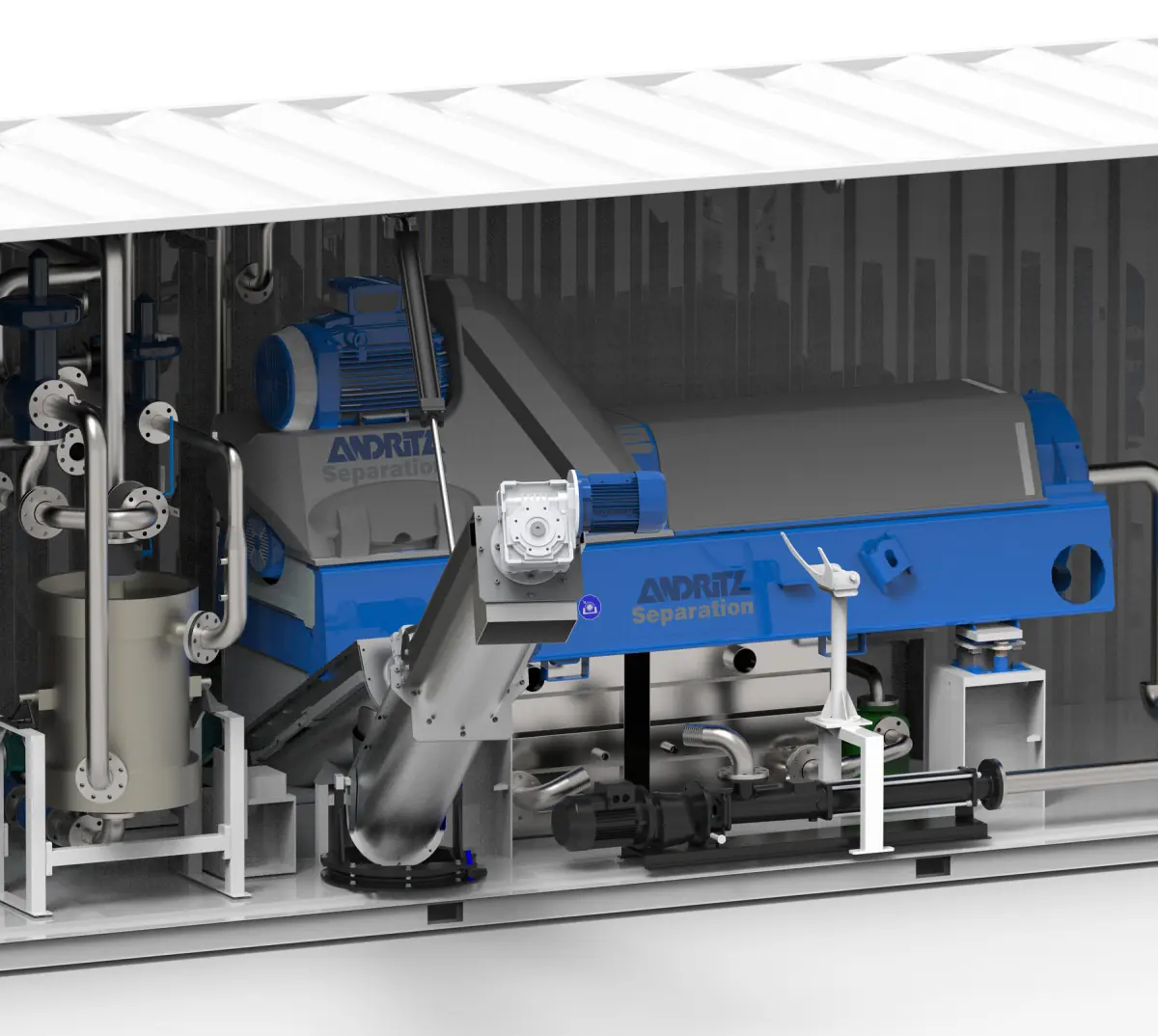
Treatment combines three actions: heat, chemistry and centrifugal force. The heat exchanger brings the slop to 85-95 °C, demulsifier and polyelectrolyte break the emulsions, and the three-phase decanter continuously separates oil, water and solids
Letting slop settle in a tank is not enough: stable emulsions stay bound. A treatment plant is needed, and a mobile containerised unit brings it to where the slop is, without hauling the waste elsewhere
- Thermal
- Heating to 85-95 °C with a spiral heat exchanger
- Chemical
- Demulsifier and polyelectrolyte, dosed in line
- Mechanical
- Three-phase separation with a decanter centrifuge, in continuous operation
The slop oil
treatment process
Slop oil is treated where it is. REC-OIL is a containerised plant that arrives on site, connects and works next to the tank
- Suction
- Gerotto robots and suction units empty tanks, lagoons and basins with no operators inside, in ATEX Zone 0
- Mechanical protection
- The vibrating screen removes stones and coarse solids before pumps and centrifuges
- Reactive tank
- Heating, mixing and reagents neutralise H2S and mineralise heavy metals such as mercury
- Heating
- The spiral heat exchanger brings the mixture to 85-95 °C
- Conditioning
- Polyelectrolyte and demulsifier, dosed in line, prepare the mixture for separation
- Separation
- The Andritz three-phase ATEX decanter separates the three phases; the pipette adjusts the levels while the machine is running
- System
- REC-OIL, mobile or fixed
What comes out of treatment
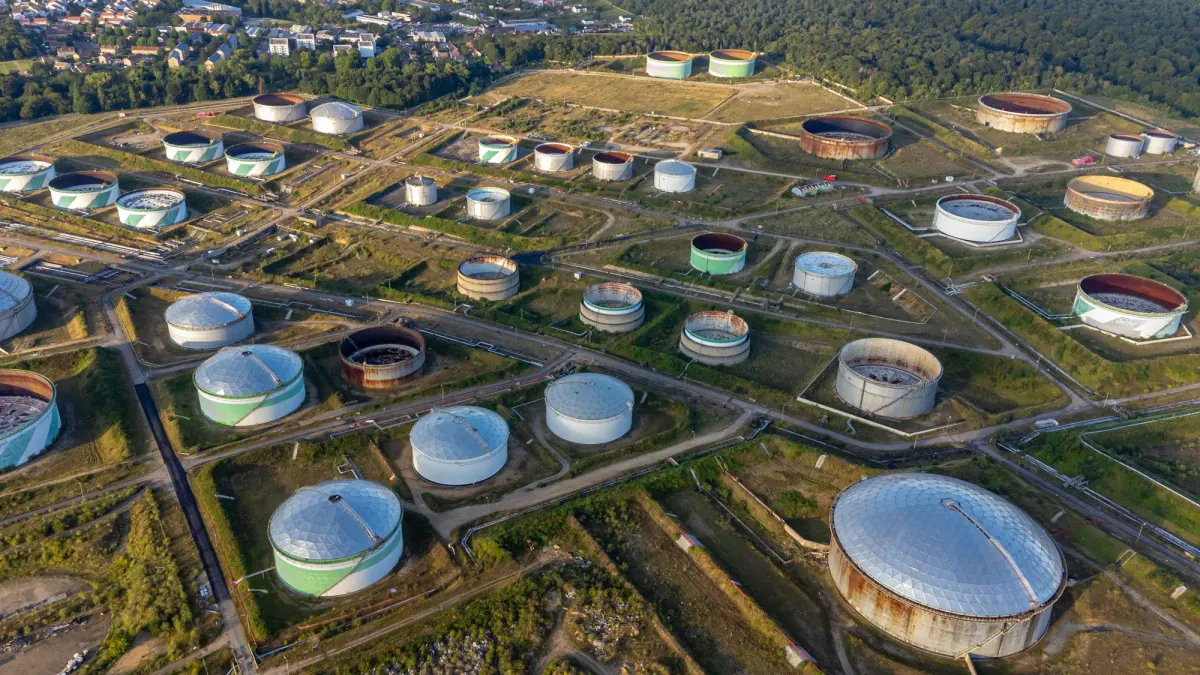
Three separate outputs: oil to put back into the cycle, water to discharge or reuse, spadeable solids. Only the solids go to disposal
Indicative flow rates and yields: actual results depend on the product and the plant
Slop oil treatment:
common questions
How is slop oil treated?
It is drawn from the tank, heated to 85-95 °C, conditioned with demulsifier and polyelectrolyte, and separated in a three-phase decanter. Three streams come out: oil, water and solids
What are the slop oil treatment methods?
Thermal, chemical and mechanical, used together: heat and chemicals break the emulsions, the centrifuge separates the three phases. Gravity settling alone is not enough, because slop emulsions are stable
Does slop oil treatment need a fixed plant?
No. The mobile REC-OIL plant is containerised: it arrives on site, connects and gets to work. It can also stay installed as a fixed plant
Where is refinery slop oil treated: on site or off site?
On site, next to the tank or the pit. Treating slop where it is produced avoids hauling large volumes of hazardous waste by road: only what is left after separation travels
What is the difference between a standard decanter and a pipette decanter?
Slop changes all the time. With a standard decanter every change in the feed means stopping the machine; with the pipette system the adjustment is made while running and treatment does not stop
How much oil does treatment recover?
With the pipette decanter, over 98% of the oil present, with less than 2% water. These are indicative yields
What is the capacity of a slop oil treatment plant?
Up to 40 m3/h, depending on the model and the application
Does treatment also remove H2S and heavy metals?
Yes, before separation: in the reactive tank, heating, mixing and reagents neutralise H2S and mineralise heavy metals such as mercury
Slop oil treatment or disposal?
Treatment first, then disposal of what is left: the solids, spadeable and with over 70% dry solids. The recovered oil is no longer a waste to dispose of
Does the plant work in a hazardous area?
Yes: the Gerotto robot is certified for ATEX Zone 0, and the three-phase decanter comes in ATEX version for Zone 1 and Zone 2
Do you have slop oil to treat?
Let’s talk
We start from your waste: composition, volumes and site
Contact us