What is slop oil
and how to recover it
The mixture of oil, water and solids that builds up in refineries, depots and ports: what it is, what it is made of and how the oil is recovered from it
What is slop oil
Slop oil is the mixture of hydrocarbons, water and solids that the oil industry accumulates as a residue in refineries, depots and ports. It is not a product: it is what is left over from processing, washing and storage, and it still contains oil worth recovering
No two slops are the same. Oil, emulsion, water and solids arrive in ever-changing proportions, and the composition can change as often as twice a day
- Composition
- Free oil, emulsion, free water and solids; within them sulphur and H2S, heavy metals, asphaltenes, waxes, salts, sand and rust
- Also called
- Slop, slops, slop oils, refinery slops; the tanks that collect it are slop tanks
Where does slop oil come from
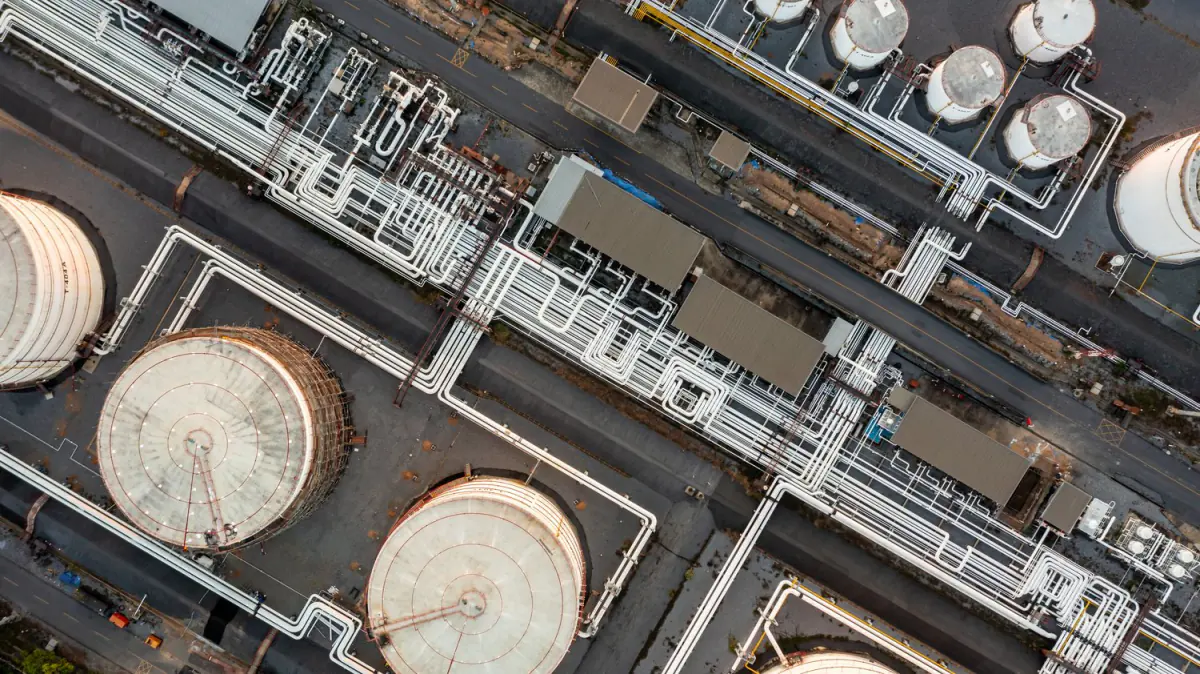
It has three sources. In refineries and depots: tank bottom sludge, settling and desalter residues, API separator sediments and oily sludge from DAF units. On ships: bilge water and tank washing residues. Upstream: spent drilling fluids and produced water
Then there are the oil lagoons, sludge pits and oil pits where slop and sludge have been stored on land
- Found in
- Refineries, depots, ports and drilling sites
How slop oil recovery works
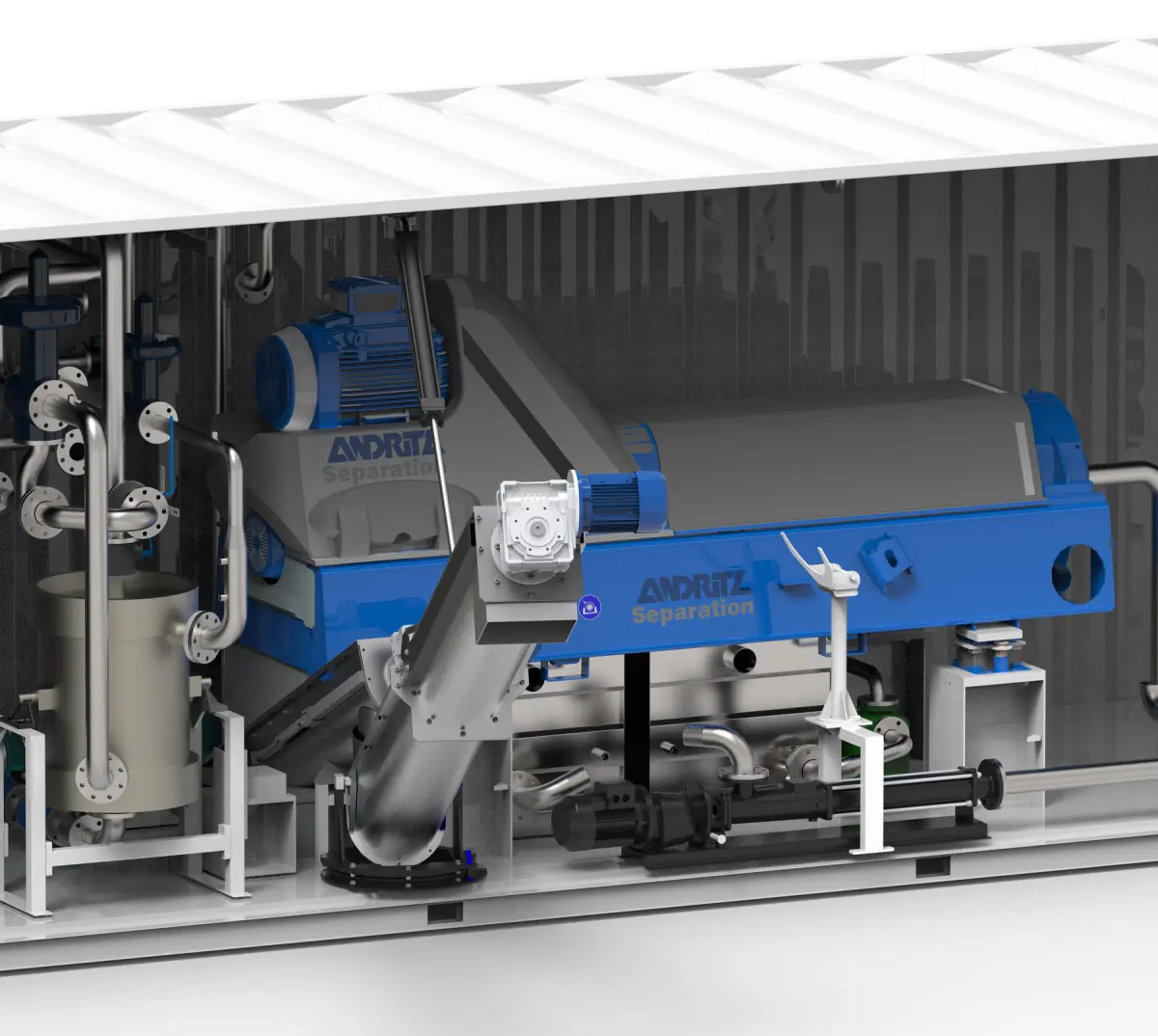
The slop is extracted by suction, heated, conditioned and separated into three phases. With REC-OIL, slop oil recovery takes place on site: a containerised plant that arrives, connects and gets to work
- Suction
- Gerotto robots and suction units empty tanks, lagoons and basins with no operators inside, in ATEX Zone 0
- Mechanical protection
- The vibrating screen removes stones and coarse solids before pumps and centrifuges
- Reactive tank
- Heating, mixing and reagents neutralise H2S and mineralise heavy metals such as mercury
- Three-phase separation
- Spiral heat exchanger, dosing and Andritz three-phase ATEX decanter with pipette system, controlled by a single electrical panel
- Flow rate
- up to 40 m3/h, depending on model and application
- System
- REC-OIL, mobile or fixed
What is recovered from slop oil
Three separate lines: the recovered oil becomes a product again, the water is discharged or reused, the solids come out spadeable. Much less is left to dispose of
Indicative flow rates and yields: actual results depend on the product and the plant
Common questions
about slop oil
What does slop oil mean?
The meaning of “slop” is liquid waste: slop oil is waste oil, that is the mixture of hydrocarbons, water and solids that ends up in the slop tanks of refineries, depots and ships. Other languages use the same English term
What is slop oil made of, and does its composition change?
Free oil, emulsion, water and solids, in proportions that change from one batch to the next. It also contains sulphur and H2S, heavy metals, asphaltenes, waxes, salts, sand and rust
What is a slop tank, in a refinery and on a ship?
It is the tank that collects the slop. In refineries and depots it receives the oily waste from processing and drainage; on oil tankers the MARPOL convention assigns it to tank washings and other oily mixtures
What is the difference between slop oil and oily sludge?
Slop oil is the mixture as a whole, still rich in oil. Oily sludge is its densest part, loaded with solids: tank bottoms, API separator sediments, DAF sludge. Both are treated with the same plant
Can slop oil be recovered?
Yes. With three-phase separation the oil becomes usable again: the Andritz pipette decanter recovers over 98% of it, with less than 2% water. These are indicative yields
Why is slop oil difficult to treat?
Because it changes all the time and forms stable emulsions. With a standard decanter every change in the feed means stopping the machine; with the pipette system the adjustment is made while running and production does not stop
Where is refinery slop oil treated?
Where it is produced. The REC-OIL plant is containerised, mobile or fixed, and works next to the tank: slop oil treatment takes place on site, without hauling it elsewhere
How much slop oil can a plant treat?
Up to 40 m3/h, depending on the model and the application
How does slop oil disposal work?
First it is separated, then only what is left is disposed of: the solids, spadeable and with over 70% dry solids. The recovered oil is no longer a waste to dispose of
Do you have slop oil to recover?
Let’s talk
We start from your waste: composition, volumes and site
Contact us